
Watch and share these videos to build an informed, actionable, and empathetic movement to prevent overdose.
We all have a role to play. Invite parents, educators, first responders, clergy, service providers, businesses, law enforcement, librarians, and other community members to watch, discuss, and take action.
SPONSORED BY
Hear personal stories and build compassion for people’s journeys though addiction and recovery
Learn about Ken’s journey of addiction, treatment, and compassion
The Path to Recovery: A Story of the Ups and Downs of Addiction Treatment
Watch and share videos on the core concepts of addiction, treatment, and risk reduction
Addiction 101: Understanding Lived Experience and the Science to Prevent Overdose
The Science and Stigma of Addiction
The Lesson of Risk Reduction
Discover how communities are taking action to prevent overdose
Communities Preventing Overdose: The Role of Substance Use Navigators with Lived Experience in Emergency Departments
Communities Preventing Overdose: A Youth Led Campaign
Communities Preventing Overdose: Responding to Pushback
Learn how to reach those at higher risk of overdose
Creating Connection: Reaching Rural Communities to Prevent Overdose
Creating Connection: Reaching Black Faith-Based Communities to Prevent Overdose
Creating Connection: Reaching Tribal Communities to Prevent Overdose
TOOLS & RESOURCES
Ready to take action?
Use these tools and share with friends, family, and anyone who has a stake in preventing overdose in your community.

Addiction 101: Actions You Can Take
Use this worksheet to locate overdose prevention resources in your community and identify actionable steps to you can take individually, in your personal network, and across sectors.
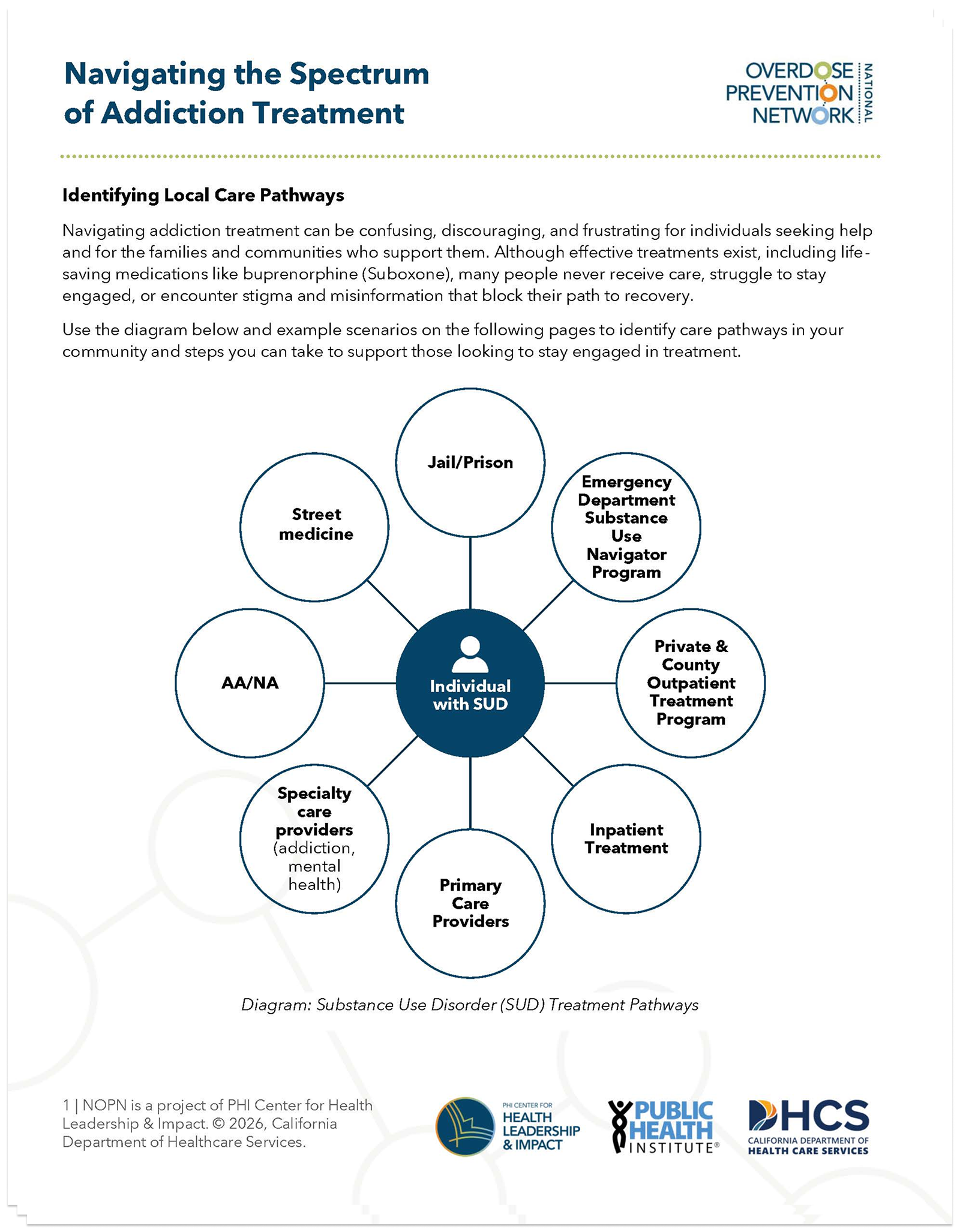
Navigating the Spectrum of Addiction Treatment
Identify care pathways in your community and steps you can take to support those looking to stay engaged in treatment.
Help build a compassionate movement to prevent overdose
Do you have friends, family, or know other members of your community who are impacted by addiction? Share this page with people you know, including parents, educators, first responders, clergy, service providers, businesses, law enforcement, librarians, and other community members.
Support for this webinar series was made possible through funding from the California Health Care Foundation.